
Setting Up for a Strong Homeschool Year
Aug 02, 2026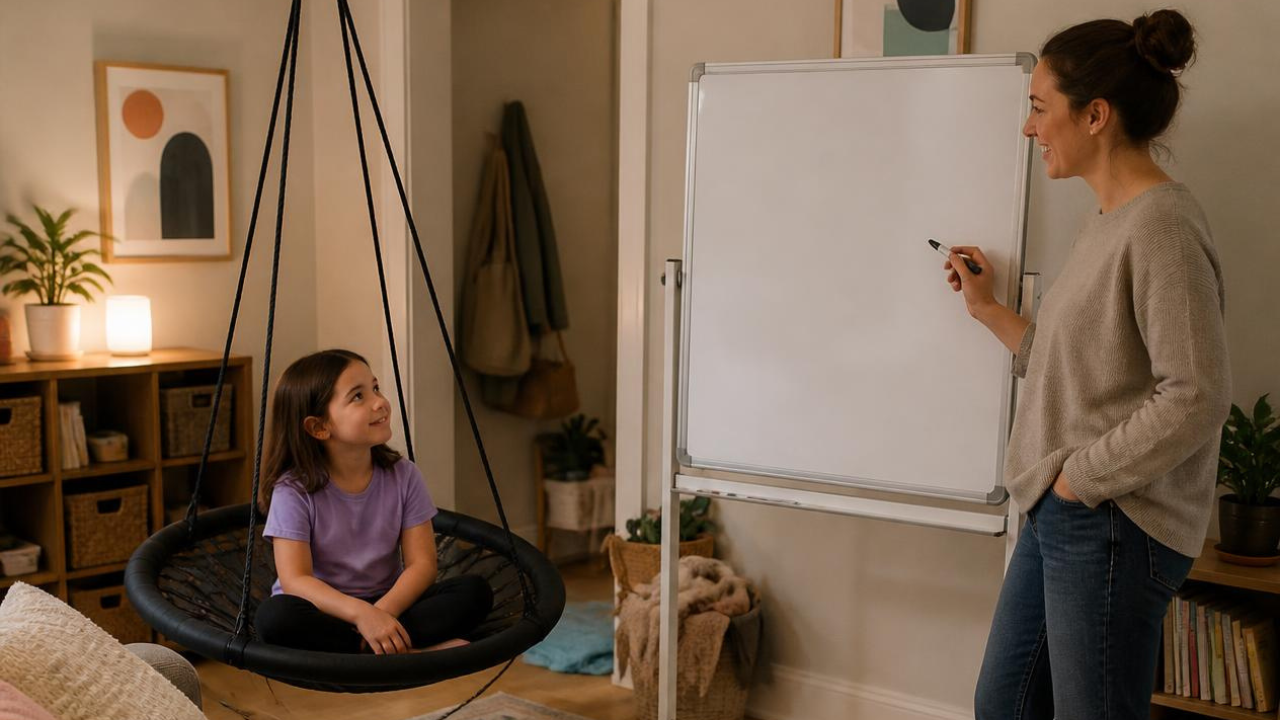
Whether you are returning after a more relaxed summer or just beginning your homeschool journey, the start of a new school year is a natural moment to reset, refresh, and set your student up for success. For families of nonspeaking and autistic learners, that preparation looks a little different than the traditional back to school checklist — and that is a good thing.
Here are five areas worth focusing on as you head into a new year.
Prepare the Environment
Your homeschool space does not need to look like a classroom. What it does need to do is work for your student.
Start by thinking through your child's sensory preferences. Lighting, seating, sounds, and materials all play a role in how comfortable and ready to learn your student feels. Some students do better with movement built in — a yoga ball, a standing surface, or the freedom to learn in different spots around the house. Others need a quieter, more contained space with fewer distractions. And many of our students learn just as well outside, at the playground, or on an everyday outing as they do at home.
Let your student's needs guide the setup rather than fitting them into a space that was not designed with them in mind.
Build Routines That Feel Safe
Predictable routines help autistic learners feel safe, and a student who feels safe is a student who can learn. As you head into a new school year, think about how you can build consistency into the day without making it rigid.
- Let your child have input on the order of subjects whenever possible.
- Break lessons into small, manageable chunks with preferred activities in between.
- Use visual schedules, timers, or checklists to help your student understand what is coming next.
- At the end of each session, take a moment to review everything your student accomplished. Crossing off completed work is a small but meaningful way to make progress visible.
Use Motivation Meaningfully
Positive reinforcement encourages students to engage with challenging tasks, but the key is finding what actually motivates your child. Tokens, stickers, pretend money, or real-life incentives can all work depending on your student. The goal over time is to help them work toward slightly larger rewards, building the capacity for delayed gratification gradually and without pressure.
Just as important: praise effort, participation, and persistence — not just correct answers. Recognize every success, even on the hard days.
Ease In With Errorless Learning
The beginning of a school year should build confidence, not anxiety. If your student is new to homeschooling or returning after a break, start with highly successful, errorless activities that establish trust and set a positive tone.
For example, a simple errorless activity might be cutting out images of fish, seaweed, an octopus, and seashells and placing them onto a printed page showing an underwater scene. Every item belongs on the page, so there is no wrong answer. While your student works, you narrate and label — "fish," "seaweed," "octopus" — building vocabulary and engagement without any pressure to perform.
Trust the Process
One of the most important things to hold onto as a homeschooling parent is this: learning often happens long before students are able to demonstrate what they know.
Continue exposing your child to age-appropriate academics even when expressive communication is limited. A lack of outward performance is not a lack of understanding. Many of our students make significant gains throughout adolescence and adulthood. Keep building the foundation today while trusting that expressive abilities may develop over time.
Preparing for a new school year is not about creating the perfect setup or following a rigid schedule. It is about creating an environment where your child feels safe, supported, and capable of learning. Every family finds their own rhythm, and that rhythm will shift throughout the year. Celebrate the progress, stay flexible when challenges arise, and remember that every lesson, every conversation, and every encouraging moment is building something real.
REFERENCES
-
Review of sensory processing and environmental modification strategies for autistic learners in home and educational settings (PMC / Frontiers in Psychology).
-
Research on visual supports and structured routines as evidence-based practices for autistic students, including visual schedules and task completion supports (ERIC / National Professional Development Center on ASD).
-
Overview of errorless learning as an instructional strategy for autistic and nonspeaking learners, including its role in building confidence and reducing school anxiety (Behavior Analyst Certification Board / Cambridge Center for Behavioral Studies).
-
Research on receptive language and implicit learning in autistic individuals, supporting the idea that comprehension often exceeds expressive output (Autism Research, Wiley).
Nonverbal Autism Homeschool enrollment is currently open!
Stay connected with news and updates!
Join our mailing list to stay updated on Nonverbal Autism Homeschool courses, special events and new blog posts. You'll also receive free curriculum, inspirational messages, autism parenting hacks and more!
We hate SPAM. We will never sell your information, for any reason.
