
How We Use YouTube as a Learning Tool
Jun 21, 2026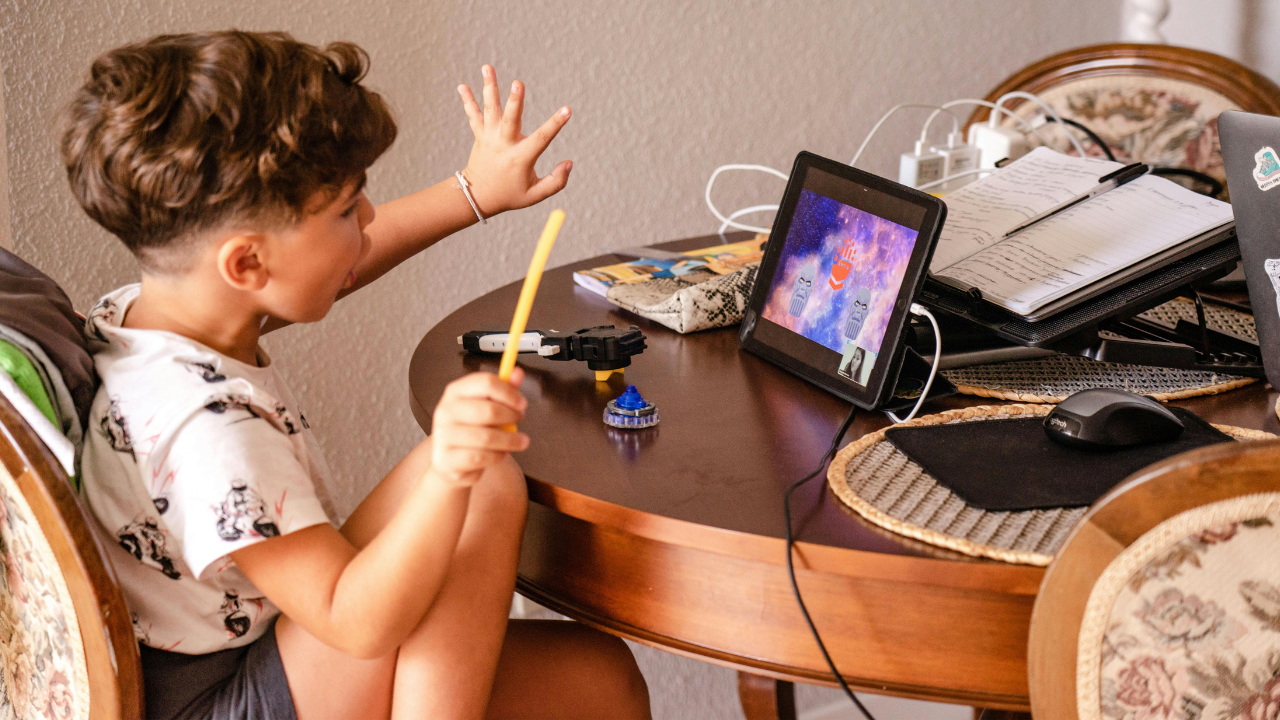
YouTube gets a complicated reputation in conversations about kids and screen time. But when used intentionally, it is one of the most versatile and accessible educational tools available to homeschooling families, and for our students especially, video can be a genuinely powerful way to learn.
Here is how we think about using YouTube in and alongside the Nonverbal Autism Homeschool curriculum.
Why Video Works for Our Students
Research consistently supports video-based learning as an effective approach for autistic learners. Video provides predictable, repeatable content that students can watch as many times as they need. It combines visual and auditory input simultaneously, which supports comprehension in ways that text or images alone often cannot. And for students who are highly visual, seeing something demonstrated or illustrated on screen can make an abstract concept suddenly click.
The key is being intentional about what you choose and how long it runs.
Know Your Student's Video Habits
Every student has their own relationship with video content, especially when it is not something they chose themselves. Some kids will watch anything. Others are very specific about what they will and will not accept on a screen.
Through trial and error over the course of our own homeschool journey, we found that very short videos were the sweet spot. My daughter is particular about what she watches, and suggested content did not always land well. But a short, focused clip on whatever subject we were covering? She would tolerate it, and more often than not actually enjoy it.
You do not need a documentary. A clear, focused clip that illustrates exactly what you are teaching is all you need.
Matching the Video Format to the Topic
Not all educational videos are created equal, and part of using YouTube well is knowing which style fits the subject you are covering.
For concepts like wants versus needs, community helpers, or social skills, illustration-style or animated videos tend to work beautifully. The visuals are clear, the characters are simple, and the pacing is easy to follow.
For science topics, real-life footage is often more effective. If you are teaching about volcanoes, a National Geographic style video with actual footage of lava and eruptions makes the concept visceral and memorable in a way that a cartoon simply cannot.
Use your judgment based on what your student responds to and what the topic calls for.
A Few Channels Worth Knowing
Jack Hartmann Kids Music Channel is one of our favorites for math and early literacy. His videos are musical, repetitive, and visually clear, all things that work well for our students. Counting, number recognition, phonics, and more are covered in a format that is genuinely engaging.
National Geographic Kids is a reliable source for science topics. Their videos are high quality, appropriately paced, and use real photography and footage that makes the natural world feel immediate and exciting.
Beyond these, a simple YouTube search for your current topic will often surface good options. Search the concept you are teaching plus "for kids" or "elementary" to narrow results to age-appropriate content.
Come Visit Our Channel
If you find yourself spending time on YouTube looking for curriculum support, our channel is a good place to bookmark. We are still growing the channel, so new content is added regularly. The Autism Oasis shares curriculum previews, instructional videos for parents, and real-life glimpses into homeschooling a nonspeaking autistic student. It is a good place to get a feel for our approach before enrolling, or to find a helpful resource when you need one.
You can find us at youtube.com/@theautismoasis.
REFERENCES
-
Review of video-based interventions for autistic children and young people across 438 studies, finding strong evidence for video as an effective teaching tool across social, behavioral, and academic domains (PMC / Campbell Systematic Reviews).
-
Expert consensus study on the use of video with autistic students, finding video to be extremely effective for learning and identifying key implementation considerations (Procedia Social and Behavioral Sciences, ScienceDirect).
-
Study examining educationally useful YouTube videos for parents of autistic children, exploring how parent-shared video content supports community and learning (PubMed).
Nonverbal Autism Homeschool enrollment is currently open!
Stay connected with news and updates!
Join our mailing list to stay updated on Nonverbal Autism Homeschool courses, special events and new blog posts. You'll also receive free curriculum, inspirational messages, autism parenting hacks and more!
We hate SPAM. We will never sell your information, for any reason.
