
Why Art Belongs in Your Homeschool
Feb 22, 2026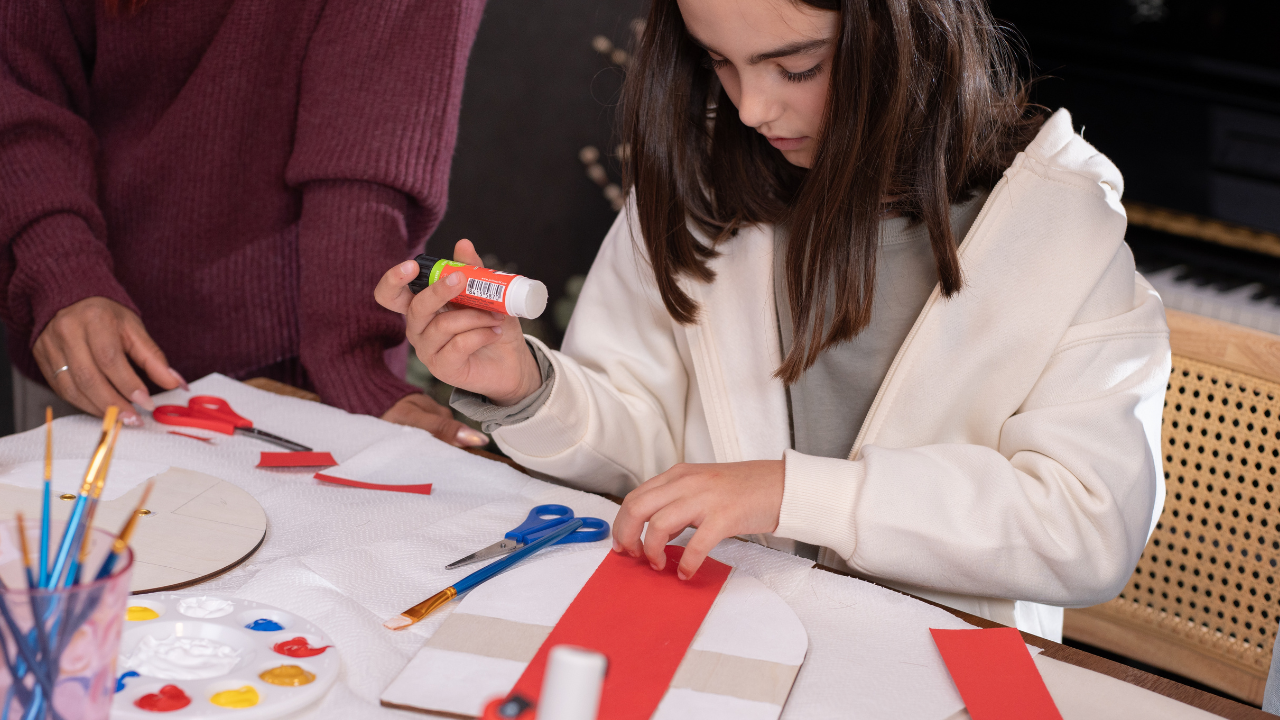
When we think about homeschool curriculum, we often picture reading, math, and the academic boxes we’re trying to check. But art education belongs in that same category. Not as an extra. Not as a reward. As a meaningful learning lane that supports thinking, communication, self-regulation, and participation for autistic students and students with disabilities.
And here’s the best part: incorporating art into your homeschool routine is one of the most flexible ways to support learning. You can keep projects simple, adapt them to your child’s motor abilities and tolerance, and still reinforce academic skills in a hands-on way.
Why Art Matters
Art is naturally adaptable. A student can participate by choosing colors, pointing to materials, watching you model, stamping once, or completing a full multi-step project. That range is powerful.
Research on arts education highlights benefits that overlap with many of the skills our learners are actively building:
- Self-regulation and emotional expression. Art gives the hands a job and creates a safe outlet for expression.
- Social and process skills. Turn-taking, planning, following steps, and trying again.
- Participation and confidence. A finished product creates a visible “I did it” moment.
Art provides structure with flexibility built in. That combination matters for students who thrive with predictability but still need room to explore.
The Flexible-by-Design Mindset
In our homeschool, art works best when we treat it like adjustable equipment, not a one-size craft.
Ways to keep art accessible:
- Reduce the steps. One action is enough.
- Switch the response mode. This might include pointing, eye gaze, choice-making, hand-over-hand support, or modeling.
- Offer a finished example, or keep it open-ended.
- Trade tools. Bingo daubers, paint sticks, chunky crayons, sponge brushes, stickers, and pre-cut shapes can make participation easier.
- Shorten time. Two minutes counts.
Art does not need to be perfect to be beneficial.
How I Incorporate Art With My Student
1) Art That Connects to What We’re Learning
This is my favorite way to reinforce a lesson. If we’re learning something academically, I look for a simple project that revisits the same concept in a hands-on way.
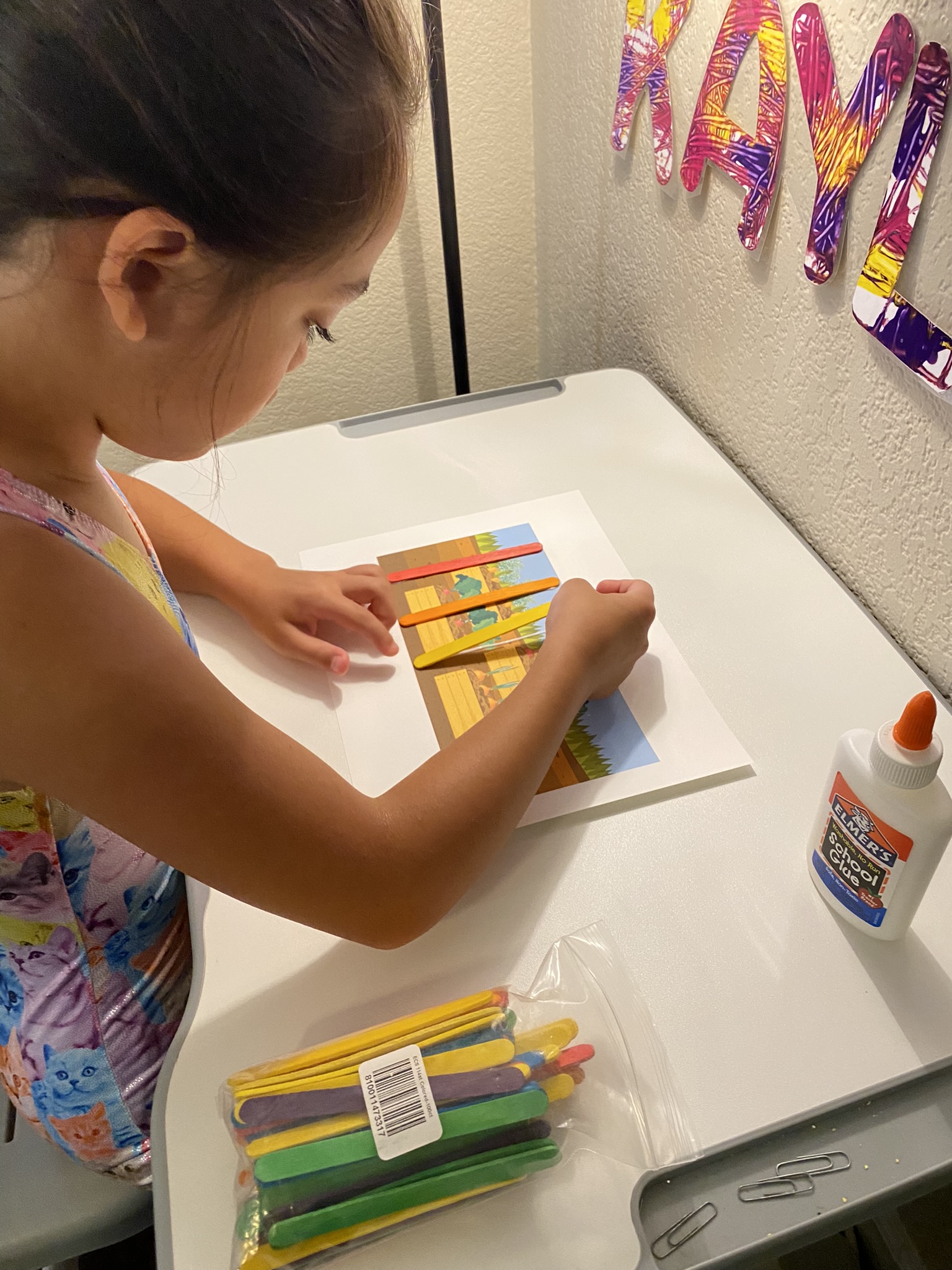
We were reading The Tale of Peter Rabbit so I printed an illustration of a garden and we built a fence around it. Very simple, only a few steps necessary.
Examples:
- Reading: Illustrate a character, create a setting collage, glue images that match the story.
- Math: Dot-marker ten frames, shape collages, pattern strips.
- Science: Label a simple diagram, paint weather types, build a paper plant.
- Social studies: Community helper craft, map coloring, flag collage.
This gives the concept another path into the brain—visual, motor, and meaningful.
2) Holiday and Seasonal Art
Seasonal themes are often the easiest entry point, especially during busy times of year.
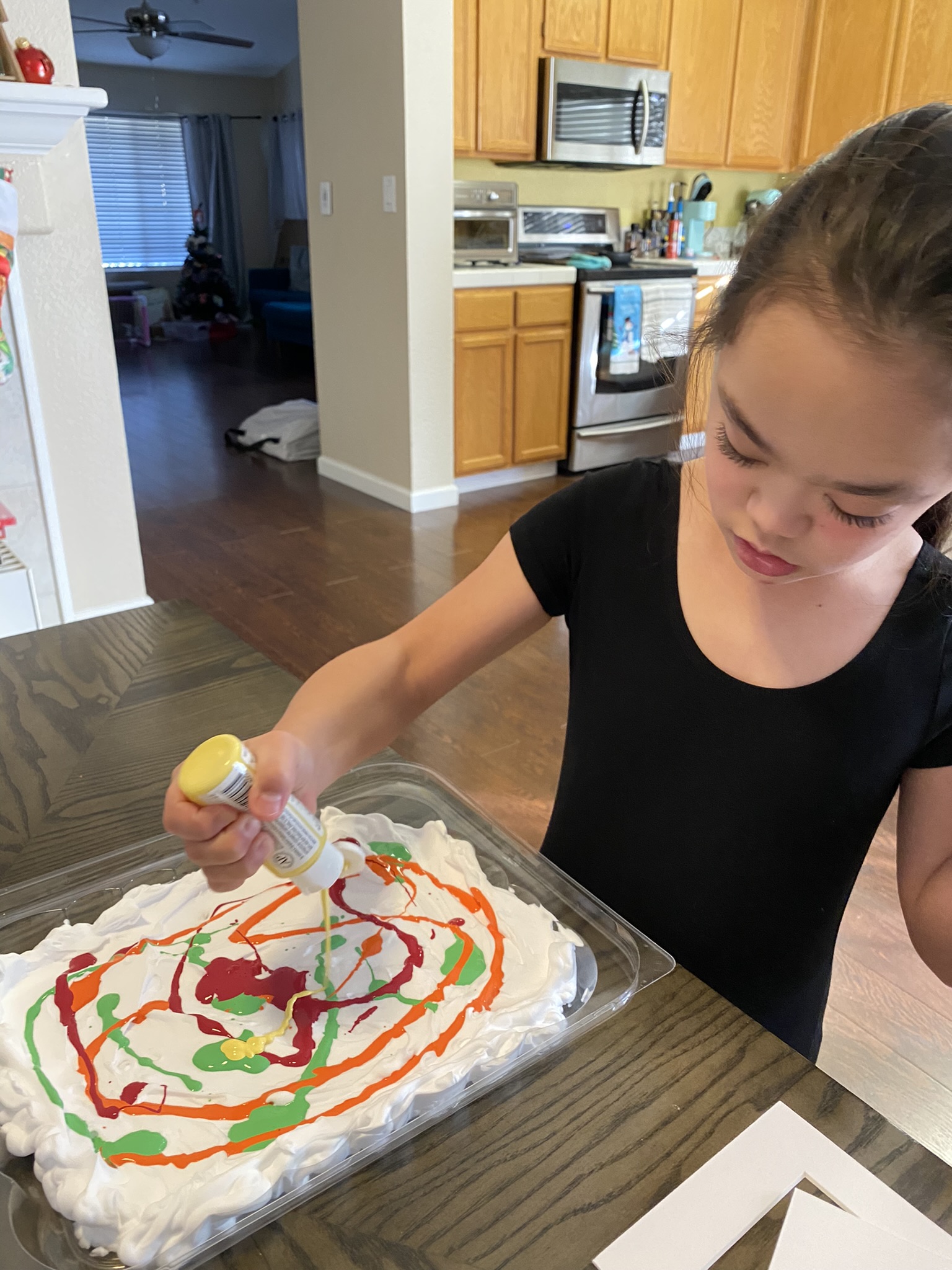
Shaving cream and "fall" seasonal colors of acrylic paint swirled together, then we placed a piece of paper on top to capture the pattern. Another simple project that you can extend if your student enjoying the process.
Keep it simple:
- Torn-paper snow scenes
- Sponge-stamp turkeys
- Spring flower stamping
- Summer watercolor “ocean wash”
- Fall leaf rubbings
Seasonal art is also a natural opportunity to model language if your student uses AAC. Words like more, done, look, help, same, different, and color words fit easily into a structured, motivating activity.
3) Store-Bought Kits (Then I Scale Them)
I love store-bought art kits because they remove prep. I do not treat the directions as strict rules. I adjust based on interest and tolerance.
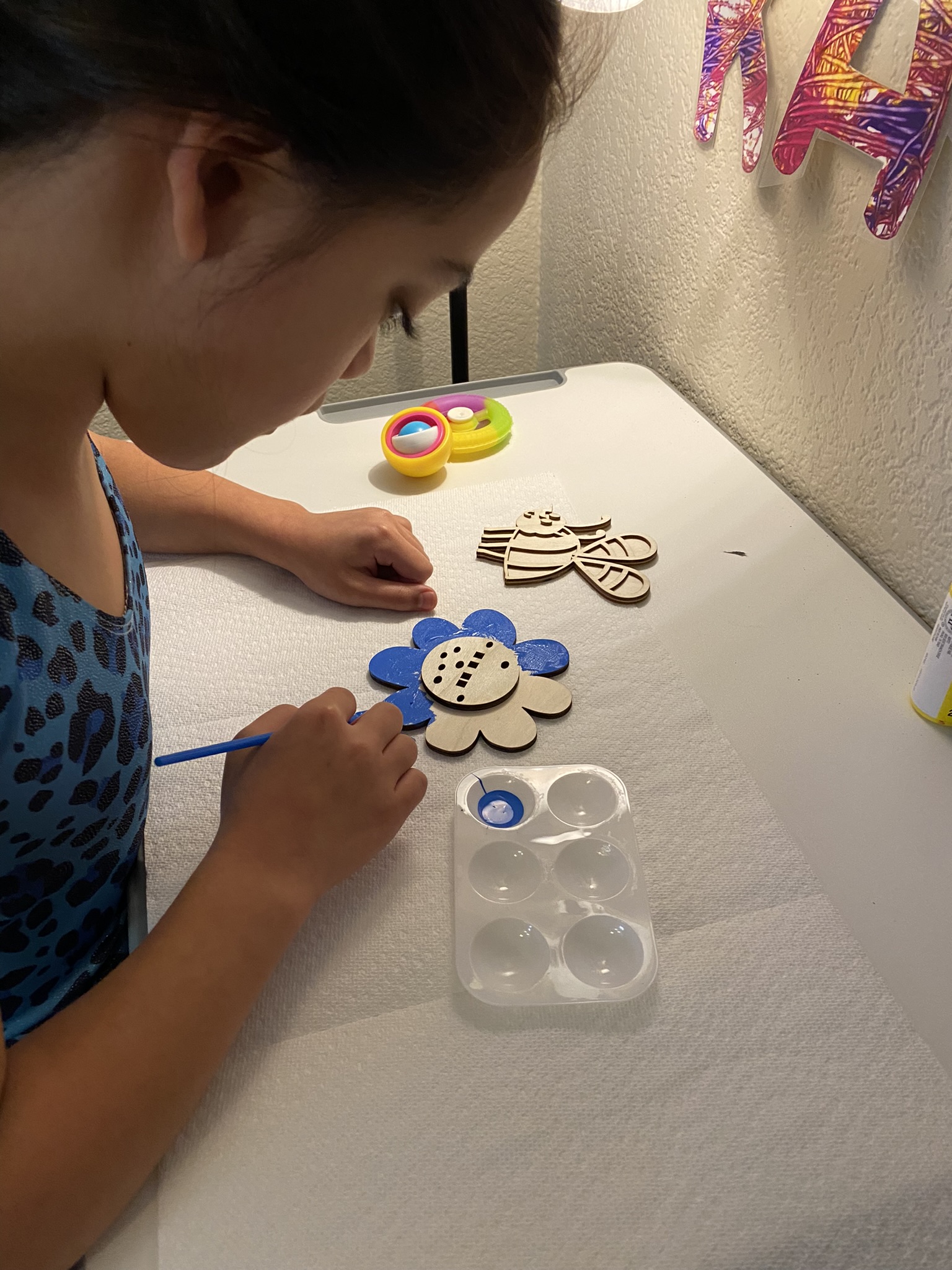
Little wooden painting kits found at stores like DollarTree, Michaels, Hobby Lobby can be great in a pinch or for a quick activity with minimal prep.
How I scaled difficulty over time:
- Level 1: Choose colors or materials.
- Level 2: Complete one repeated action such as dabbing, pressing, or placing.
- Level 3: Add a second step.
- Level 4: Follow a short sequence with visual support.
- Level 5: Add design choices or small details.
This approach respects regulation while gradually building independence and stamina.
Practical Tips for Success
- Protect regulation first. Swap materials if textures are a barrier.
- Use a predictable routine with the same space, start, and clean-up pattern.
- End on success. Stop while it is still going well.
- Display finished work if your child enjoys it. Pride matters.
Simple Supply Ideas
You do not need anything fancy to get started. Dot markers, paint sticks, sponge brushes, stickers, and pre-cut shapes go a long way.
If it helps, we’ve put together a short list of art supplies we’ve personally found useful.
Start Small
While our courses include structured art activities designed to support learning goals, there is always room to expand. Following your child’s interest and adding simple creative moments can deepen engagement and make lessons even more meaningful.
If you have been unsure where art fits in your homeschool, it fits anywhere. Start small. Keep it flexible. Follow interest. Let creativity count as learning, because it does.
Autism Oasis uses a few affiliate links (including Amazon). When you purchase through them, we may receive a small commission that helps us create more resources for our community.
REFERENCES
- Research highlighting how arts education supports children’s social-emotional development, self-regulation, and identity formation (National Institutes of Health / PMC).
https://pmc.ncbi.nlm.nih.gov/articles/PMC8161501/ - Review examining creative arts interventions for children with autism, including impacts on participation and process skills (American Journal of Occupational Therapy / PMC).
https://pmc.ncbi.nlm.nih.gov/articles/PMC9575654/ - Occupational therapy–focused review discussing how art-based interventions can support functional skills and engagement in autistic learners (American Journal of Occupational Therapy).
https://research.aota.org/ajot/article/75/Supplement_2/7512515298p1/13070/Art-Interventions-in-Autism-Applications-for-OTs-A - National overview discussing why childhood arts experiences matter for academic and social-emotional growth (National Endowment for the Arts)
https://www.arts.gov/stories/blog/2025/educating-ourselves-about-childhood-arts-experiences-and-why-they-matter
Nonverbal Autism Homeschool enrollment is currently open!
Stay connected with news and updates!
Join our mailing list to stay updated on Nonverbal Autism Homeschool courses, special events and new blog posts. You'll also receive free curriculum, inspirational messages, autism parenting hacks and more!
We hate SPAM. We will never sell your information, for any reason.
