
Spring Sensory Activities That Support Learning
Mar 08, 2026
Spring brings longer days, brighter light, new sounds, and changing routines. For many of our students, seasonal transitions can feel exciting and dysregulating at the same time. Thoughtfully planned sensory activities can help bridge that shift while also supporting meaningful learning.
Research shows that structured sensory experiences can support growth in motor skills, communication, attention, and emotional regulation for children with autism. Activities that engage touch, movement, and visual input are often highly motivating and can help sustain focus. Spring, with its visible growth and environmental changes, gives us a meaningful opportunity to connect sensory exploration with academic development.
Below are three spring sensory activities. The first two lean toward early elementary learners, while the third is designed with older students in mind.
Spring Garden Sensory Bin (Early Elementary Focus)
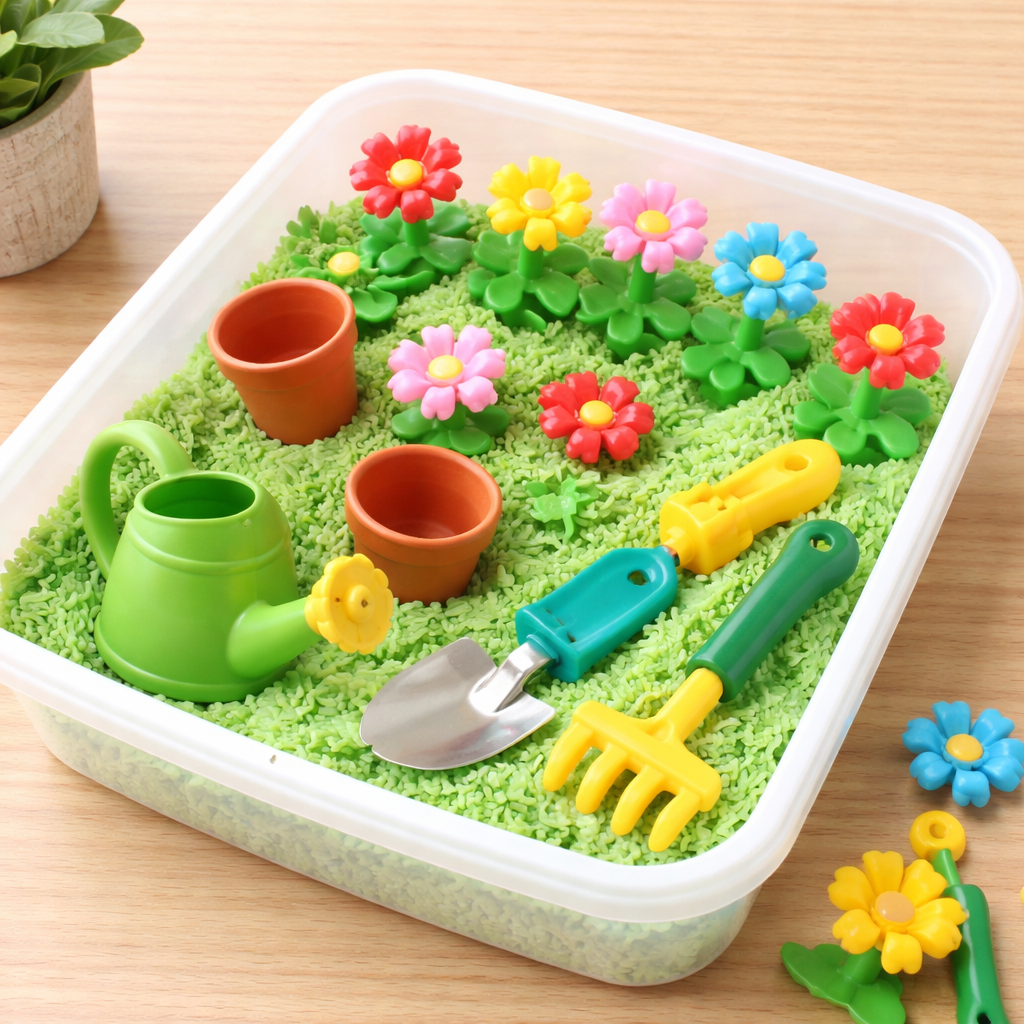
A spring-themed sensory bin can be filled with dyed rice or beans, small plastic flowers, scoops, cups, and miniature garden tools. Students can dig, scoop, pour, and “plant” flowers.
This activity supports:
- Fine motor strength and coordination
- Bilateral hand use
- Early math skills through sorting and counting
- Vocabulary development
Model core words such as “in,” “out,” “more,” “dig,” and “help.” Add simple directions like “Put the red flower in” or “Find three flowers.” Students can sort by color, create simple sets, or practice one-to-one correspondence.
This kind of hands-on sorting and categorizing builds foundational math concepts while providing calming tactile input. It also supports early scientific thinking through classification and comparison.
Plant Life Cycle Window Project (Early to Mid Elementary Focus)
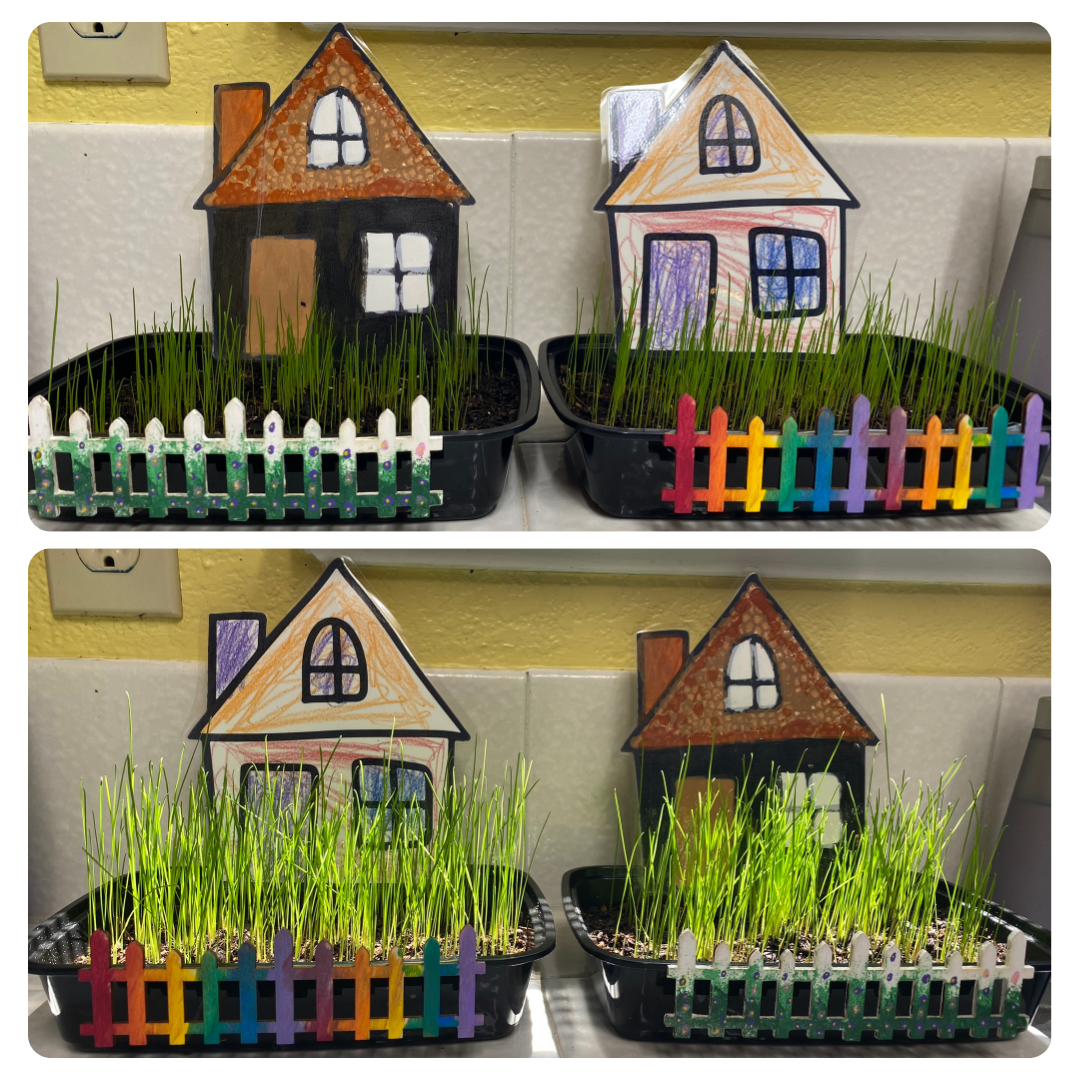
This activity combines art, science, and daily observation. Use a small plastic to-go container as a mini greenhouse. Have your student color a simple house drawing that is slightly narrower than the width of the container. If appropriate, they can cut it out independently or with support. Laminate the house and trim it to fit inside the container so it stands as a background.
Add a layer of soil, sprinkle cat grass seeds on top, and gently water. Place the container near a window for sunlight and spritz lightly with water each day.
Over the next several days, students can observe changes:
- Seeds resting in soil
- Sprouting roots
- Green shoots emerging
- Growth and height changes
This activity supports:
- Understanding plant life cycles
- Sequencing (first, next, then, finally)
- Measurement and observation
- Responsibility through daily care
- Fine motor skills when adding soil, seeds, and water
Model words such as “seed,” “grow,” “water,” “sun,” “root,” and “plant.” Include phrases like “I see,” “It is growing,” “More water,” or “Look at that.”
This project aligns naturally with elementary science standards around life cycles and plant needs. Students observe patterns over time, record changes, and discuss cause and effect. It also incorporates art through the house illustration, making the project personal and visually engaging.
If students are comfortable with tactile input, they can help place the soil and seeds. If not, they can direct the process and participate through pointing, modeling, or observation. The daily check-in builds anticipation and reinforces the concept that growth takes time.
Spring Nature Investigation Station (Upper Elementary Focus)
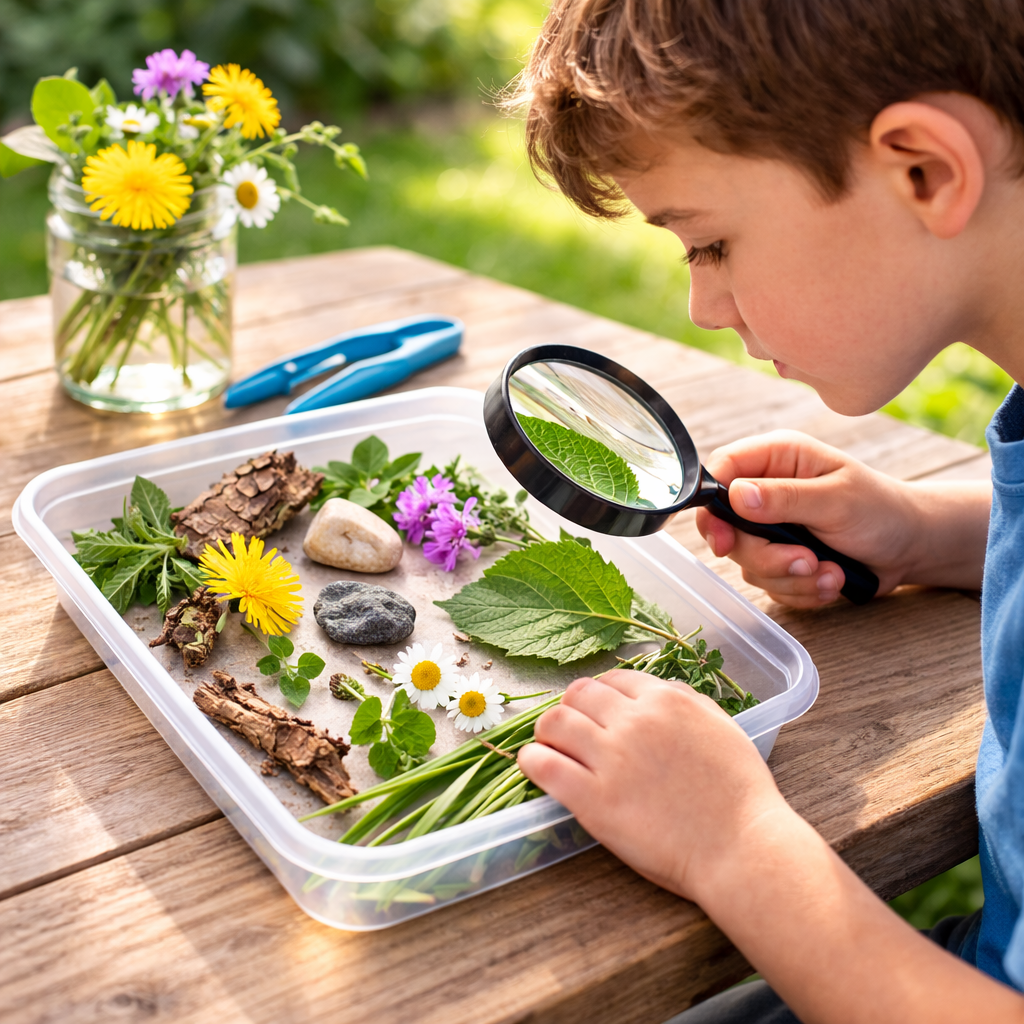
For older students, shift from playful exploration to structured investigation. Take learning outdoors or bring nature inside. Collect leaves, grass, twigs, flower petals, small stones, or even rainwater in a clear container. Provide magnifying glasses, tweezers, rulers, and an observation sheet. If you have access to a microscope, this is a perfect opportunity to examine plant fibers, leaf veins, or tiny particles in rainwater more closely.
Students can:
- Sort items by texture, size, or type
- Compare smooth vs. rough, flexible vs. rigid
- Measure length and record data
- Sketch and label observations
- Create simple classification charts
- Track daily temperature or rainfall for a week
- Observe details under magnification
This activity supports:
- Scientific observation skills
- Data collection and recording
- Measurement and comparison
- Descriptive and academic vocabulary
- Fine motor precision
Model words such as “observe,” “compare,” “measure,” “record,” and “different.” Include phrases like “I notice,” and “It feels."
This activity aligns with upper elementary science practices such as making observations, using tools to gather information, identifying patterns, and describing changes in the natural world. Spring provides visible evidence of growth and environmental shifts, making it an ideal time to explore plant development and seasonal patterns in depth. Focused observation of natural materials can also provide calming sensory input while reinforcing academic skills.
Keeping It Accessible
Participation matters more than perfection. Students can direct, point, choose, record verbally, or use AAC to demonstrate understanding even if they are not completing every physical step independently. Adapt tools as needed, offer choices, and presume competence.
Spring offers natural opportunities to engage the senses across grade levels. When sensory experiences are paired with intentional instruction, they can support communication, motor development, literacy, math, science thinking, and confidence in ways that feel relevant and engaging.
REFERENCES
- Sensory features and participation research: Sensory patterns in children with autism can affect activity participation and development. (PMC – Activity Participation and Sensory Features Among Children with ASD)
- Multi-sensory environments research: Having control over sensory environments can help autistic children pay more attention and engage with fewer repetitive behaviors. (PMC – The use of Multi-Sensory Environments with autistic children)
- Seasonal sensory play overview: Spring sensory play supports sensory processing, motor skills, language development, and emotional regulation through natural materials and seasonal themes. (The Music Scientist – Seasonal Sensory Play: Spring Themes & Songs for Early Childhood Development)
- Sensory activity benefits summary: Engaging children in activities that stimulate the senses supports cognitive, emotional, and physical development. (Sensory Kids Iowa – Benefits of Sensory Play)
- Spring sensory and nature play ideas: Spring sensory play can engage the senses and promote exploration, motor skills, and learning with seasonal materials. (Creative Learning NJ – Spring Sensory Play)
Nonverbal Autism Homeschool enrollment is currently open!
Stay connected with news and updates!
Join our mailing list to stay updated on Nonverbal Autism Homeschool courses, special events and new blog posts. You'll also receive free curriculum, inspirational messages, autism parenting hacks and more!
We hate SPAM. We will never sell your information, for any reason.
